

Why monaziticus watches the hours after the light drops
A desk built around one part of the trip that most lists treat as leftover time.
We started when a simple pattern kept repeating: travelers arrived with full daytime plans and no answer for dinner, the walk back, or the hour they would turn in. This page explains how the project grew from that gap, how we check what we publish, and how a consultation moves from your first note to a usable evening shape.
Origins
A question that daytime itineraries rarely answer
monaziticus began with field notes, not with a product pitch. One of us kept watching groups leave lodging at noon with a clear list and return near midnight because the evening had no shape of its own. Dinner happened wherever a queue looked interesting. The walk home started after maps stopped making sense. The next morning opened with the kind of tired that no coffee fixes on a travel day.
The problem was not a lack of enthusiasm. It was a missing sequence. Experienced travelers already knew what to defer, when to sit down, and when to turn back. Newcomers copied the density of a daytime list and called it thoroughness. We wanted a place that named the evening as its own chapter: one meal, one loop, one return, chosen before the body is already spent.
That focus narrowed quickly. We are not a general travel agency and we do not sell a booking tool. We write about dusk streets, dining rooms at peak hour, quiet blocks after lamps come on, and the last stretch to a door. Consultations stay inside that lane so advice stays honest about what we can see on the ground.
The name stays a placeholder until the site launches, but the work already has a spine: compare how evenings behave, publish what repeats, and answer individual questions without adding another landmark to an already long day. If that sounds narrow, it is meant to. Breadth is easy. A usable close is not.
Editorial method
How a note becomes something we publish
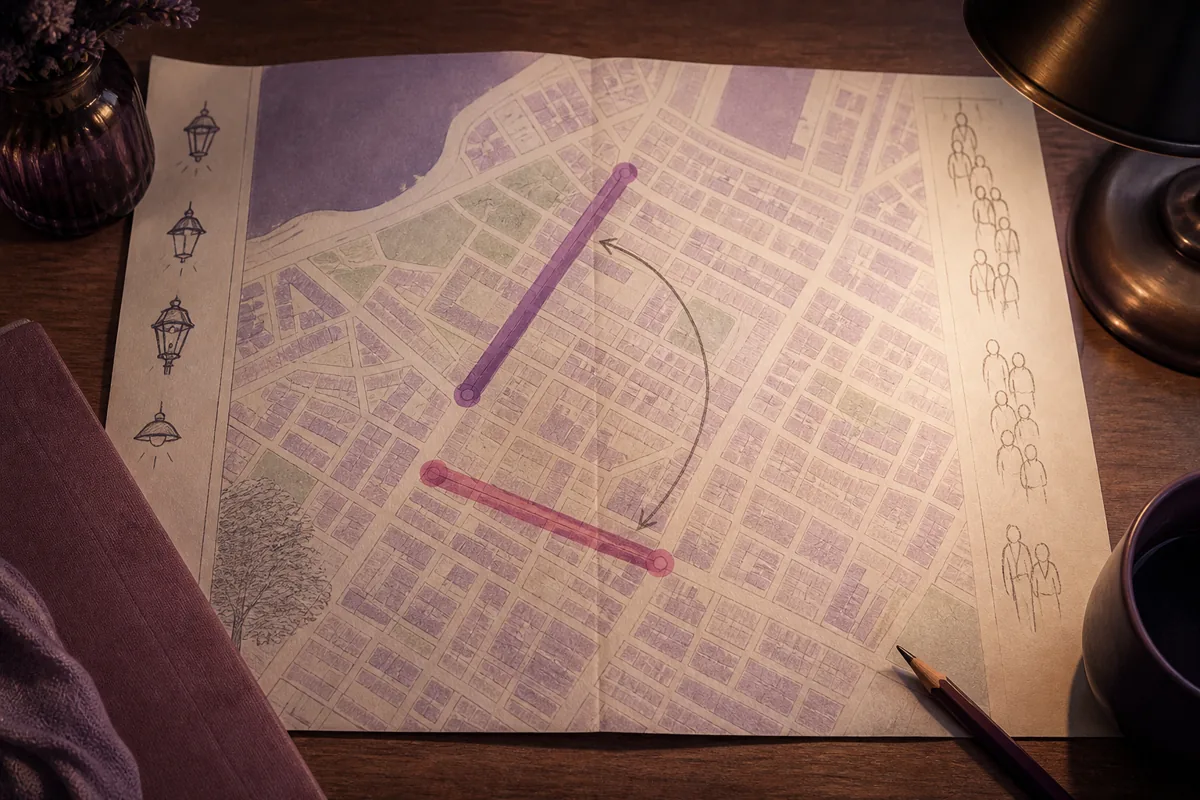
Every guide on this site passes through the same checks. We are not reporting breaking news; we are comparing patterns that only show up when you walk the same hour more than once. That requires discipline about what we claim and what we leave for a live confirmation on your night.
- Walk the hour twice
- A single pass is an anecdote. We repeat the same block after sunset on two separate trips, or with two observers on one trip, and compare pace, light, and where people actually stop for food.
- Separate pattern from preference
- A room we like is not automatically a room that fits a tired arrival day. We tag whether a note describes a repeatable rhythm or a personal taste, and we keep those labels in the draft.
- Check against the lodging desk
- When a front desk or host confirms hours, we update the draft. When they cannot, we say so in the text instead of guessing. Published pages name what should be verified again before you go out.
- Cut promises we cannot support
- If a line sounds like a guarantee of calm, safety, or sleep, it goes. We keep verbs like compare, suggest, and prepare. Readers decide on the street, not in our prose.
Consultations
From your first message to an evening you can actually finish
A consultation is not a longer itinerary. It is a short set of decisions about dinner timing, the walk you will take, and the point where you turn back. The steps below are what the desk follows after you write in.
-
Listen for the arrival shape
We ask how you reached the lodging, who travels with you, and how much daylight you already spent moving. A transfer day gets a shorter evening than a day you spent mostly inside. This step sets the ceiling before any street names appear.
-
Name one dinner window
You receive two or three room types that match your pace, not a ranked list of ten places. We note where a queue usually forms and whether a reservation is worth the mental cost on a tired night.
-
Draw the return loop
The walk back is sketched as a there-and-back on streets you can recognize in dim light. We mark a turnaround time, not only a turnaround corner, so the plan survives if dinner runs long.
-
Leave a short morning list
Anything that needs full light moves to the next day on paper. You leave the consultation with that list separate from the evening so the two do not compete after dusk.
A quiet block is not a backdrop. It is where people sleep. Our job is to teach travelers to pass through without turning someone’s doorway into a stage.
Editorial note from the monaziticus desk
Guest conduct
How we talk about place, people, and local rhythm
Evening ethics on this site are practical, not performative. We do not ask readers to memorize a speech. We ask them to notice volume, light spill from phones, and the difference between a public promenade and a residential stairwell. Those details change faster than any guide can, which is why we describe habits instead of rules copied from elsewhere.
We also refuse the fantasy that a traveler is invisible after dark. Queues, doorways, and short stops all take space. When our notes mention courtesy, they name concrete actions: keep groups narrow on narrow sidewalks, do not block a shop shutter while it is closing, and treat late seating as a privilege that ends when the room needs to turn tables.
If a local desk or host gives different guidance, that guidance wins. Our role is to help you ask better questions before you go out, not to argue with the person who lives on the block. That stance keeps the site useful without pretending we hold authority we do not have.
Partners
Independent groups whose notes we compare
monaziticus does not claim exclusive access to any venue. We maintain correspondence with two fictional briefing circles we use as sounding boards: the Blue Hour Lodging Circle, which logs how guests actually return after dinner, and Harbor Desk Walkers, which records promenade behavior after lamps switch on. Both names stand in for small independent research groups we invented for this project; they are not booking platforms.
A partner note enters our drafts only when it names a repeatable observation: when queues form, where light fails first, which blocks stay readable on foot. We drop notes that read like promotion, and we drop notes that cannot be checked on a second walk. When a partner and our own field pass disagree, we publish the disagreement and tell readers what to verify live.
Partnership here means shared vocabulary, not a logo wall. You will not find affiliate buttons or sponsored rankings on this site. If we mention a circle in an article, it is because their wording helped us describe a pattern more clearly, not because they paid for placement.
Ask the desk a concrete evening question
Tell us about your arrival day, who walks with you, and what feels uncertain after dusk. We reply with a consultation outline, not with a longer sightseeing list.
Read the field notes we publish
Articles compare dinner windows, first-night shapes, and the moment to turn back. Each piece stands alone and links to the same editorial checks described above.
Read this before you treat a page as a plan
monaziticus provides knowledge about the evening hours of a trip and offers consultations on dinner windows, dusk walks, and the return to lodging. Information on this site is meant to introduce that work. It is not a substitute for advice from qualified specialists on safety, health, local rules, or any question about how you feel in an unfamiliar place.
- We do not claim that a walk after sunset improves health, mood, or sleep, and we do not describe dusk as a remedy. Questions about fatigue, illness, or personal safety belong with the appropriate professionals, not with a travel desk.
- Conditions change between trips. Lighting, opening hours, sidewalk works, and local expectations can differ from the last note we published. Confirm details again with the lodging, a local desk, or the venue before you go out.
- Decisions on the ground remain yours. If a street, an hour, or a plan feels wrong, shorten the evening or stay in. Nothing on this site requires you to complete a route.
- Guides, checklists, and comparisons are written in general terms. They cannot see your arrival time, your company, or the weather on your night. A consultation can narrow the advice; it still cannot walk the block for you.