Travelers often treat dinner as a reward they earn by waiting. The logic sounds fair: you walked, you arrived, you deserve the table everyone talks about. On paper that works. On tired legs it frequently does not, because the wait happens standing, outside, at the hour when your body expected to be sitting down. By the time you reach a chair, the evening has already spent its best attention on the sidewalk.
What peak hour costs beyond the queue
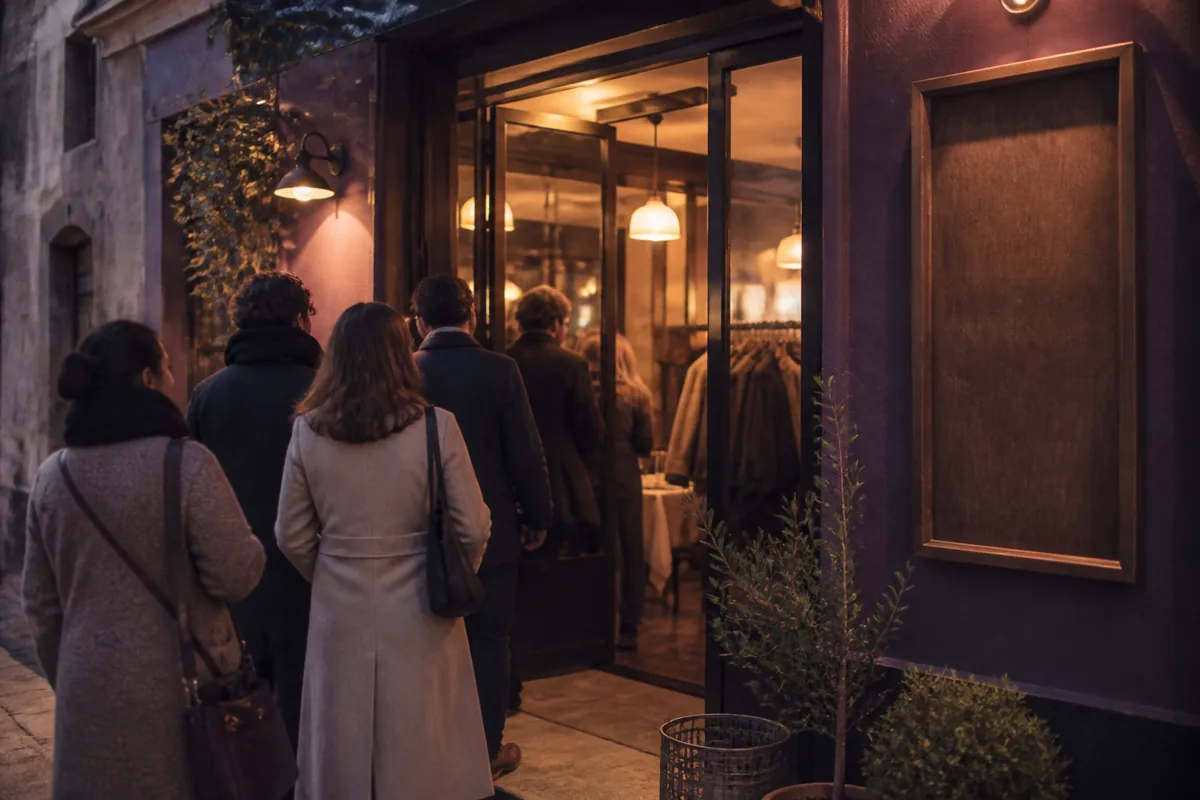
A queue has a visible length. The hidden cost is everything around it: the cold that arrives when you stop moving, the noise from the street you cannot filter, the repeated checks of a screen to see whether your group moved up, and the slow erosion of patience in companions who were agreeable an hour ago. None of that appears on a review. All of it shapes whether you still want a walk after the meal.
I measure a dinner window not by fame but by entry friction: how many steps from the door to a seat, how much negotiation with a host, and whether you can see empty tables through the glass while you wait. Low friction does not mean boring food. It means the room meets you where you actually are — hungry, a little stiff, not looking for a performance before the first course.
Reading a room from the sidewalk
You can learn a great deal in thirty seconds without joining a line. Stand to one side of the entry and watch how people move through the door:
- Coats and bags find a hook or chair within two steps — the room expects you to settle.
- The host looks up from the floor, not down at a screen — seating is live, not frozen in a system.
- Tables near the window still have water glasses — turnover is steady, not frantic.
- People inside are leaning slightly forward — conversation, not endurance.
- The menu board is readable from where you stand — you can decide before you commit your spot in line.
If every signal points to a long hold at the door, treat that as data, not as a challenge. The city will still be there tomorrow. Tonight you need a chair more than you need a story about a line.
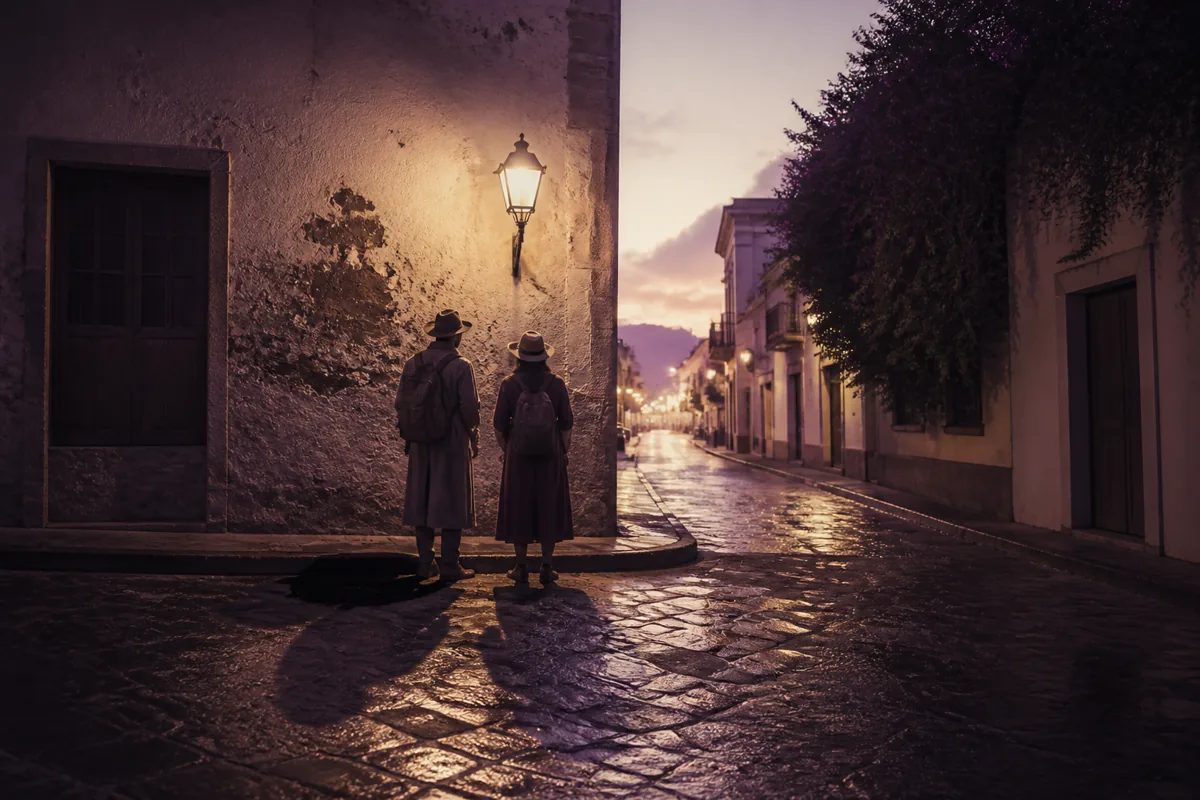
An early table is not an early night. It is how you keep enough attention for the walk back and the door you want to close at a sane hour.
Early table logic for tired legs
“Early” is relative to the room, not to the clock on your phone. For many city dining rooms, the quiet stretch begins when local workers finish and before the late crowd arrives. That gap can be as short as forty minutes. It is enough if you use it deliberately.
When I sketch a dinner window for a consultation, I ask for three anchors:
- The latest hour you want to stand on a sidewalk, not sit at a table.
- One backup room within a five-minute walk that you have already looked at from the outside.
- The walk you still want after eating — short enough that you will actually do it.
With those anchors, an early table becomes a tool. You enter before friction rises, eat while you can still taste the food, pay without rushing, and leave while the street still matches the return you planned. The famous room can wait for a morning when you are not carrying a whole travel day in your shoulders.
When a famous line is still worth it
Sometimes the queue is the plan — a companion cares deeply, you have a reservation, the room is the reason you came. In those cases, shrink everything else. Skip the pre-dinner wander, arrive at the named time, and treat the wait as part of the meal’s duration rather than an extra layer on top of it. Bring the walk forward or drop it entirely. Do not assume you will recover energy at the table that you already spent outside.
Closing the window cleanly
A good dinner window ends with a clear exit: check paid, coats found, route named once aloud. Close it at the door with one sentence — “We turn left at the bakery” — and let the evening move to its next shape. Dinner should leave you upright enough to walk home, not grateful simply to have reached a chair.