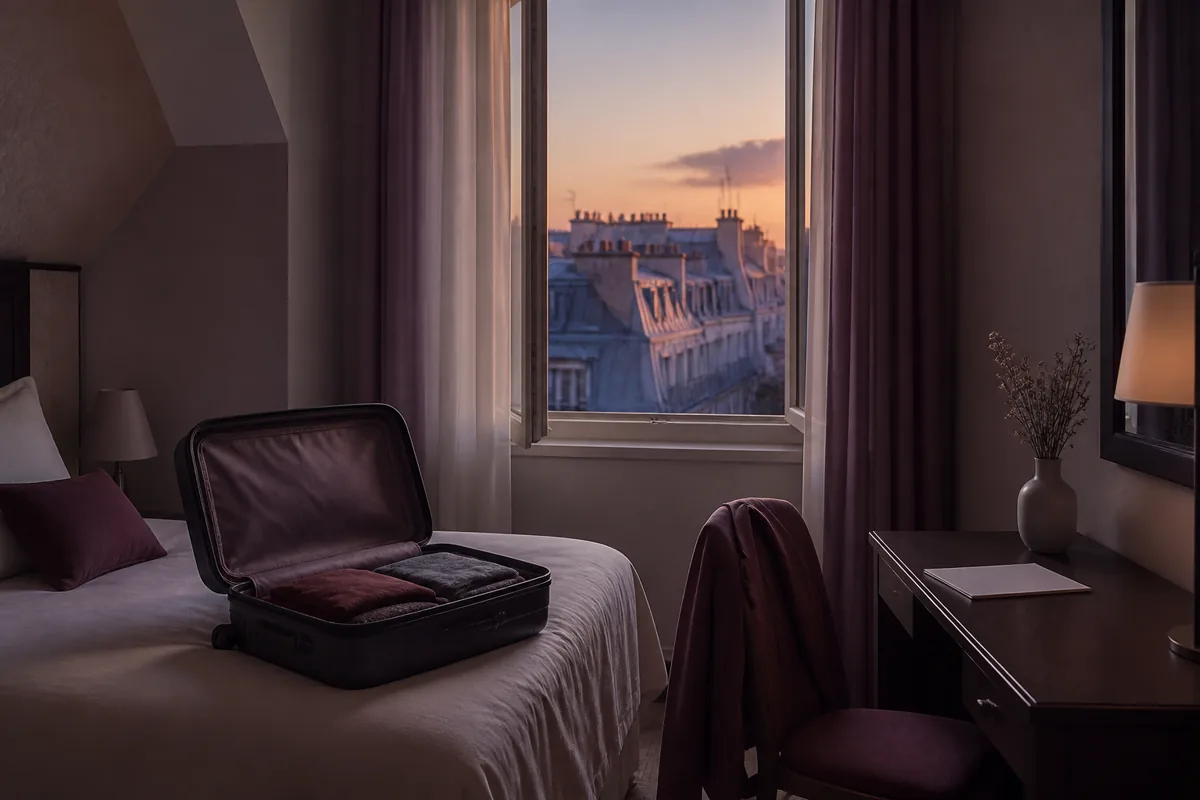
Arrival evenings collapse when they try to do two jobs at once: recover from the journey and catch up on everything the guidebook marked with a star. The room is unfamiliar, the light is leaving, and your body still thinks it is mid-route somewhere else. A workable first night does not ask much of the city. It asks for three moves in order — wash, eat, walk back the way you came — and then it ends.
Why order matters more than distance
Wash first because travel dust and compartment air cling longer than you notice. A shower or a long wash at the basin tells your body the transit chapter closed. Eat second because hunger after arrival is uneven: sharp one minute, gone the next once you sit down. If you walk before you eat, the walk becomes a search for a room, not a look at the block. Walk last, and keep it short — a reverse of the route from the door to dinner, nothing new.
A first evening succeeds when you can describe it in one line: washed, fed, walked the same streets twice, back inside before the light lied about how late it was.
The three-part shape in practice
Write the shape on paper before you unpack fully. Three words in a column are enough. When you finish each step, cross it off — not for productivity, but so your group stops reopening the plan.
- Wash and change into clothes that belong to the lodging, not to the seat you left.
- Eat within a short walk of the door, at the first low-friction room you checked from the outside.
- Walk back along streets you already saw on the way to the meal — same corners, opposite direction.
That loop is deliberately small. You are not scouting tomorrow; you are teaching your feet where home is on this block. If the meal took longer than expected, drop the walk and lock the door. The shape still holds if two of three steps completed without rush.
What to leave for tomorrow
The sights that need daylight, the market that only makes sense in the morning, the viewpoint that requires a climb — those belong on a separate list, not on tonight’s note. I keep a second column on the same paper: evening done, morning waiting. Crossing items into the wrong column is how first nights steal sleep.
- Anything that requires a map zoom belongs in the morning column.
- Anything you would regret skipping in the dark stays indoors tonight.
- One named street near the lodging is enough for the reverse loop.
- Tomorrow’s first step is written in one sentence before lights out.
When the shape feels too small
Small is the point. A first evening that ends calmly gives you a reference: you know where you ate, which corner you turned, and how long the return took. Tomorrow you can expand from that anchor instead of guessing from a screen in a tired room. You saw little — and that is enough if the night closed cleanly.
If you arrive late, compress without breaking the order: a quick wash, a simple meal, no walk. If you arrive early, resist adding sights — use the extra minutes to settle the room and write the morning column. The shape protects the trip from the adrenaline that says you must use every hour you are awake in a new place. Rest is part of the itinerary, even when it looks like empty time on paper.