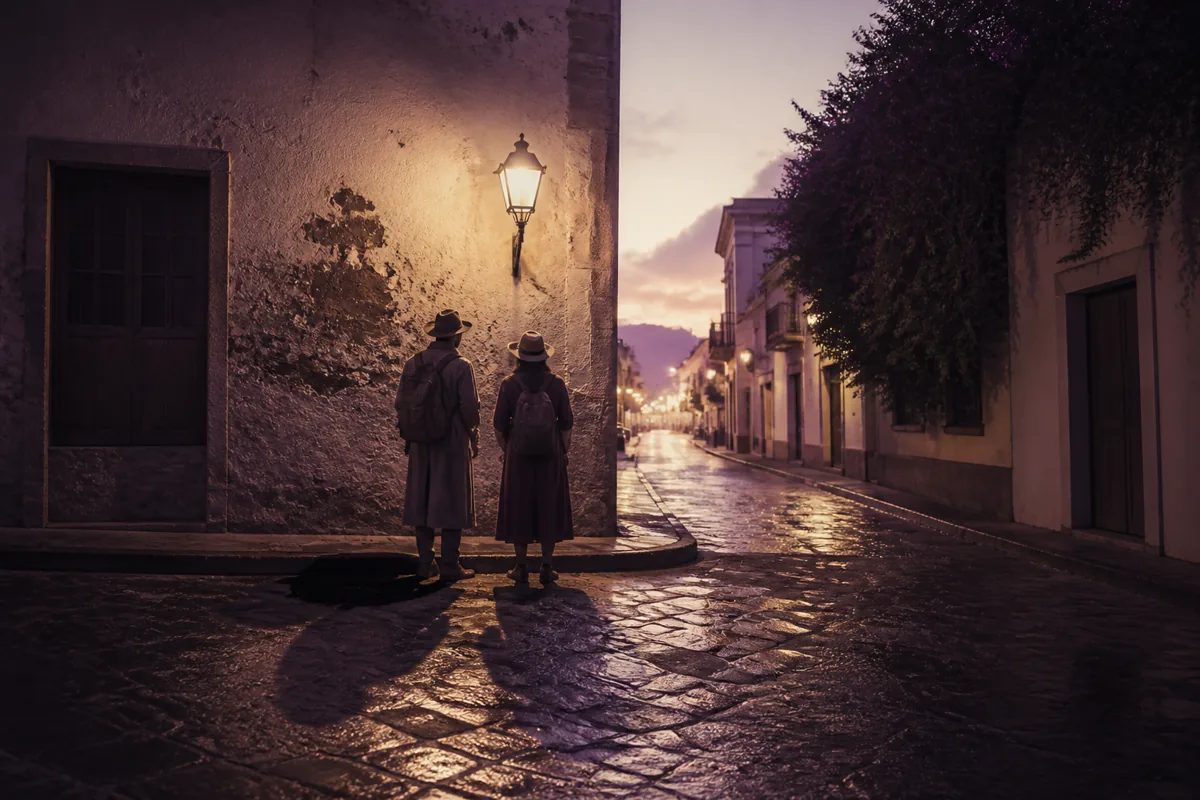
Most evening walks start with a map that was drawn for a whole day. The pins look reasonable in daylight on a screen: here a square, there a viewpoint, somewhere farther a market that closes before you usually wake. By evening those pins compress into one anxious line — everything left over from a schedule that already ran out of hours. The walk becomes a salvage mission, not a closing chapter.
Two columns, one piece of paper
I ask travelers to copy their temptations onto paper with two columns — evening and morning — before they dress for dinner. The rule is simple: if a stop needs full light, both hands free, or a climb you would skip when tired, it goes in the morning column. The evening column holds only what you can reach, eat at, and return from while the street still matches your description aloud.
Writing by hand slows the theft. A screen lets you drag pins until midnight; paper makes the evening column look empty faster — which is the honest signal. An empty evening column is not failure. It is room for one dinner and one there-and-back loop, which is often all the day has left.
What belongs on the morning list
Morning items share traits that are easy to spot once you name them:
- The farthest pin from the lodging — distance costs twice after dusk.
- Any climb where the return would happen in partial light or shadow.
- Markets and halls that depend on stalls being open, not just doors unlocked.
- Viewpoints that require a rail, a step, or a ledge you would not trust in the dark.
- Neighborhoods you have not walked yet — first contact belongs in daylight.
Move those items in ink, not in your head. When a companion says “we could still catch it,” point to the column. The conversation shifts from guilt to schedule, which is easier to end before you leave.
The evening list should be short enough to read aloud at the door. If you need a screen to remember it, it is still a day list wearing evening clothes.
What stays on the evening list
The evening column is narrower than most people expect. It is not “what we have not done yet.” It is “what still makes sense with tired legs and falling light.”
- One meal within a short walk, chosen for entry friction, not fame.
- One there-and-back loop using streets you will recognize on the return.
- One landmark near the lodging that orients you if the group splits.
- Nothing that requires a transfer, a ticket line, or a timed entry.
If your evening column holds more than four lines, cut until it fits on a sticky note. The cut items are not deleted — they move to morning with a single first step written beside each one.
Splitting a map without losing the trip
Deferring stops is not giving up on them. Morning has advantages evening cannot copy: readable menus on walls, shopkeepers who can answer a question, stairs you can see top to bottom. The viewpoint you skipped at dusk often takes less time at opening hour than it would have taken if you had chased it through back streets after dinner.
The door test
Before you lock the door, read the evening column once. Then ask: could someone who has never seen the map follow this without zooming? If the answer is no, move the fuzzy line to morning. The door test takes thirty seconds and prevents the most common evening mistake — leaving with a day-sized ambition in a night-sized window.
When the morning list grows too long
A long morning column is a signal about the trip, not about your discipline. Pick two items that matter most and leave the rest on a third list labeled later. Evening should not pay interest on that later list. It has its own small job: feed you, show you one familiar block twice, and get you back inside before readability drops.
Some travelers worry that deferring a famous stop means missing it entirely. In practice, morning visits to deferred stops are shorter and clearer because you arrive with both hands free and a map you already trimmed. The evening you protected is what makes that morning leg possible — not the pins you chased after dinner when the street no longer matched your notes.
Closing the split
Put the paper on the desk where you will see it when you wake. Circle the first morning stop in pencil, not ink — order changes once you feel the block in daylight. The evening column can be crossed off as you go; the morning column stays open until you leave the lodging after breakfast. That separation is the whole method. The walk after dinner stays small because the map stopped pretending one night could finish what the day deferred.